The Problem
Globally breast cancer is the most common cancer among women, with breast cancer causing 670,000 deaths worldwide in 2022. Prostate cancer is on the rise, with one in eight men developing it in their lifetime. There is a stark difference in cancer mortality rates in high income countries compared with low- and middle-income countries. In high income countries, 85% of women will survive breast cancer for 5 years or more post-diagnosis, compared with 25.8% in Ethiopia. Similarly, 90% of men will survive prostate cancer for 5 years or more after their diagnosis in high income countries compared with just 22% in Ethiopia.
A key issue is 67% of cancers are detected at an advanced stage.
The Solution
This partnership between Spirit Health Foundation, AstraZeneca and Global Health Partnerships was established to launch essential cancer care initiatives in underserved communities in Addis Ababa, Ethiopia. Working alongside the Regional Health Bureau and Federal Ministry of Health, the partnership will support the delivery of national cancer priorities. AstraZeneca is supporting this novel initiative through its AstraZeneca Cancer Care Africa programme and A. Catalyst Network African Cluster Hub.
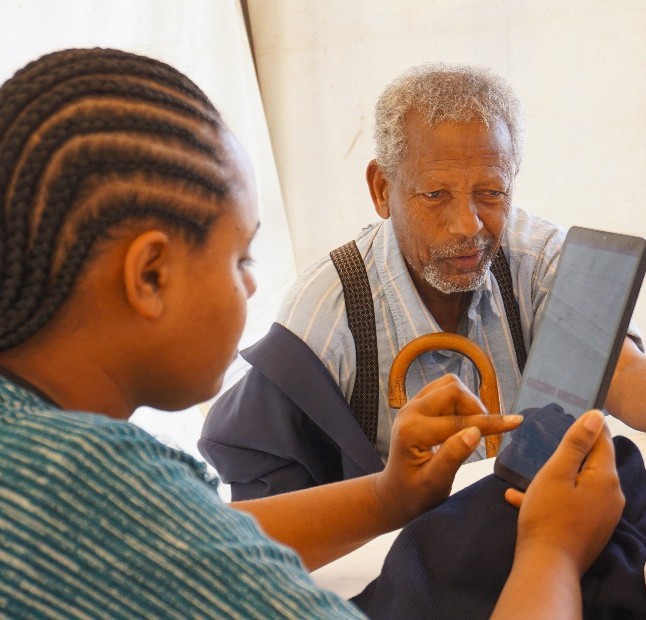
The overall goal is to improve survival for breast and prostate cancer by equipping health centres and community Health Extension Workers (HEWs) with the Clinitouch smart healthtech platform to provide at-home screening, early detection and referrals for vital treatment.
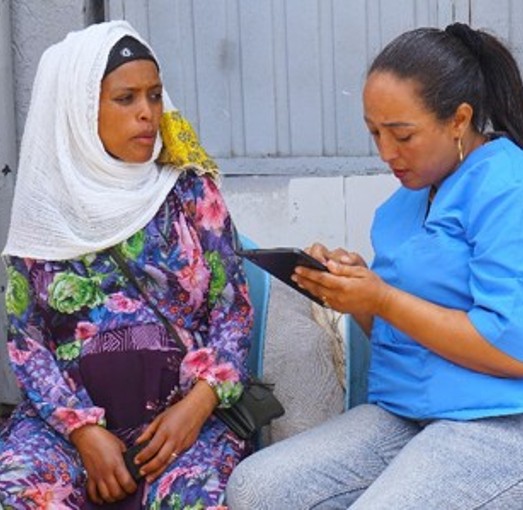
The HEWs will use the offline Clinitouch app to provide screening in the communities, generating a risk score on the Clinitouch clinician portal at remote health centres, enabling clinical staff to promptly refer ‘at-risk’ community members for diagnosis and treatment. This new cancer care solution will be supported by the development of national breast cancer and prostate cancer health worker training packages and Cancer Support Champions (CSC). These will raise awareness for prostate and breast cancer in the communities, whilst ensuring people are aware of the health services available to them.
Health Officers and Doctors at Primary Health Centres have also been equipped with the smart Clinitouch platform to provide confirmatory screening and referrals to oncology centres and hospitals, supporting the end to end pathway for breast and prostate cancer patients.
Meron Hailiye, a Health Extension Worker from Woreda 5 who participated in the launch and will be using Clinitouch, expressed her enthusiasm about the technology’s real-world impact: “With this programme, we’re not just raising awareness – we’re beginning to change the story. Before, we didn’t know who was at risk, but now we have hope that cancer care can reach beyond the city. This gives our communities new possibilities.”
The Impact
The initiative is in progress, with the goal of screening 150,000 community members by June 2026, and referring identified ‘at risk’ patients for diagnosis and the appropriate treatment. Results as of January 2026.
- 120,000+ screenings for breast and prostate cancer using Clinitouch.
- 20% of individuals screened have been detected as ‘at risk’ (Red or Amber) and referred for vital treatment.
- ~75% of high-risk individuals on track to complete their follow-up clinical check-up – and treatment as required.
- 127 local health workers and 10 centres – trained to use Clinitouch as part of country health systems.
“Clinitouch is a game-changer for frontline health workers, enabling rapid patient referrals”
Deepak Arora, Country President, African Cluster, AstraZeneca
Find out more
Find out more how Clinitouch can enable remote care in even the hardest-to-reach communities.
Get in touch